Ask someone in Java what cabe jamu is and they will probably mention their grandmother’s herbal drink before they mention cooking. Outside Indonesia, though, Java long pepper is still a bit of a mystery, even to people who work with spices every day. That is slowly changing as extract makers and specialty food brands discover it.
What it is
Java long pepper is the dried fruit spike of Piper retrofractum, a climbing vine and a close cousin of black pepper. Where black pepper grows as single round berries, this plant produces long, narrow spikes made of many tiny fruits packed tightly together.
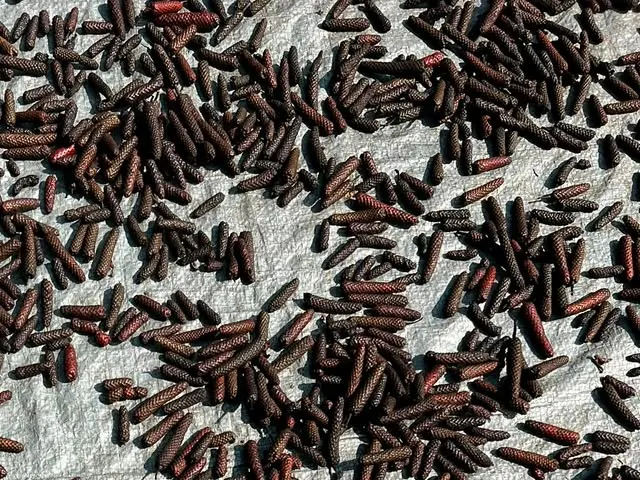
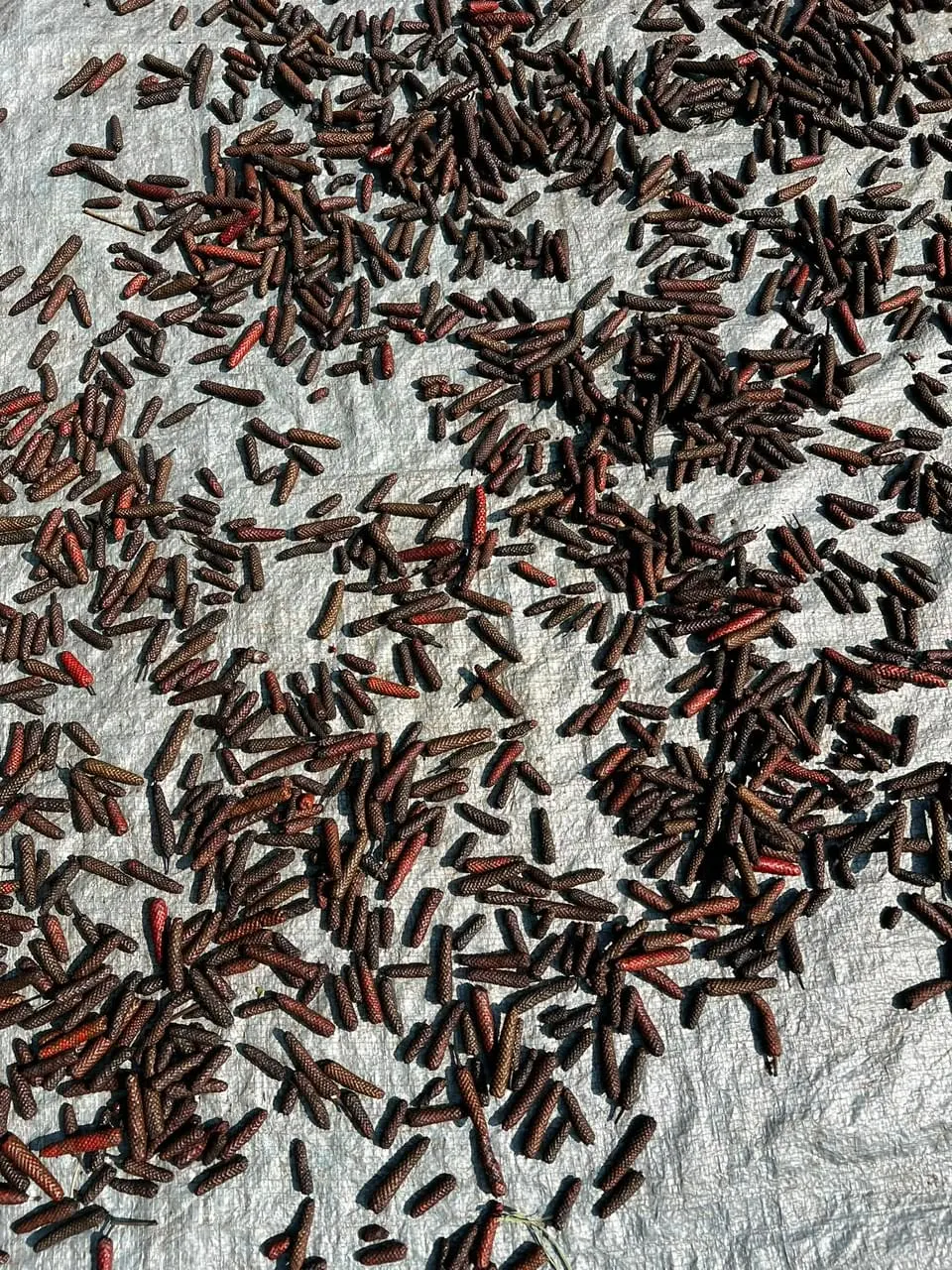
The spikes are picked when they turn red and then laid out in the sun, often on tarps or bamboo mats, until they dry to brown or dark brown. It grows across Java and Madura, and it is one of the core ingredients of jamu, the traditional herbal drinks you can still buy from street sellers all over Indonesia.
How it compares with black pepper
| Java long pepper | Black pepper | |
|---|---|---|
| Species | Piper retrofractum | Piper nigrum |
| Shape | A spike a few centimetres long | A single round berry |
| Flavour | Hot and pungent, with a warmer, slightly sweet note | Sharp, piney heat |
| Mostly used for | Herbal products, extracts, seasoning blends | Everyday cooking and the food industry |
Both owe their heat to piperine, and that is the figure long pepper is usually traded on. Our typical range is 4 to 6%. If piperine matters for your formula, ask for it to be tested on the actual lot.
Not the same as Indian long pepper
You may also be offered “long pepper” from India. That is normally Piper longum, a related species with thinner, smaller spikes. The two are used in similar ways, but they are different products, and a lab can tell them apart. Write the botanical name into your specification so there is no confusion.
Who buys it
Herbal and traditional medicine makers are the biggest users, from jamu producers to herbal tea and Ayurvedic style blends. Extract companies buy it for piperine and oleoresin. Food brands use it in rubs, sauces and seasoning blends, and some specialty shops sell it whole to cooks who want something more interesting than black pepper.
What to tell your supplier
Most of the specification is simple. Whole dried spikes are the standard form, and it can be ground on request. Moisture is usually 10 to 12%. Our typical limits are 6% ash and 1% foreign matter. Beyond that, tell us whether piperine needs testing, how you want it packed, how much you need and where it is going.
We source our long pepper from farms in Java, where it is sun dried and sorted by hand before it reaches us. You can see the full specification here, or ask us for a quote.