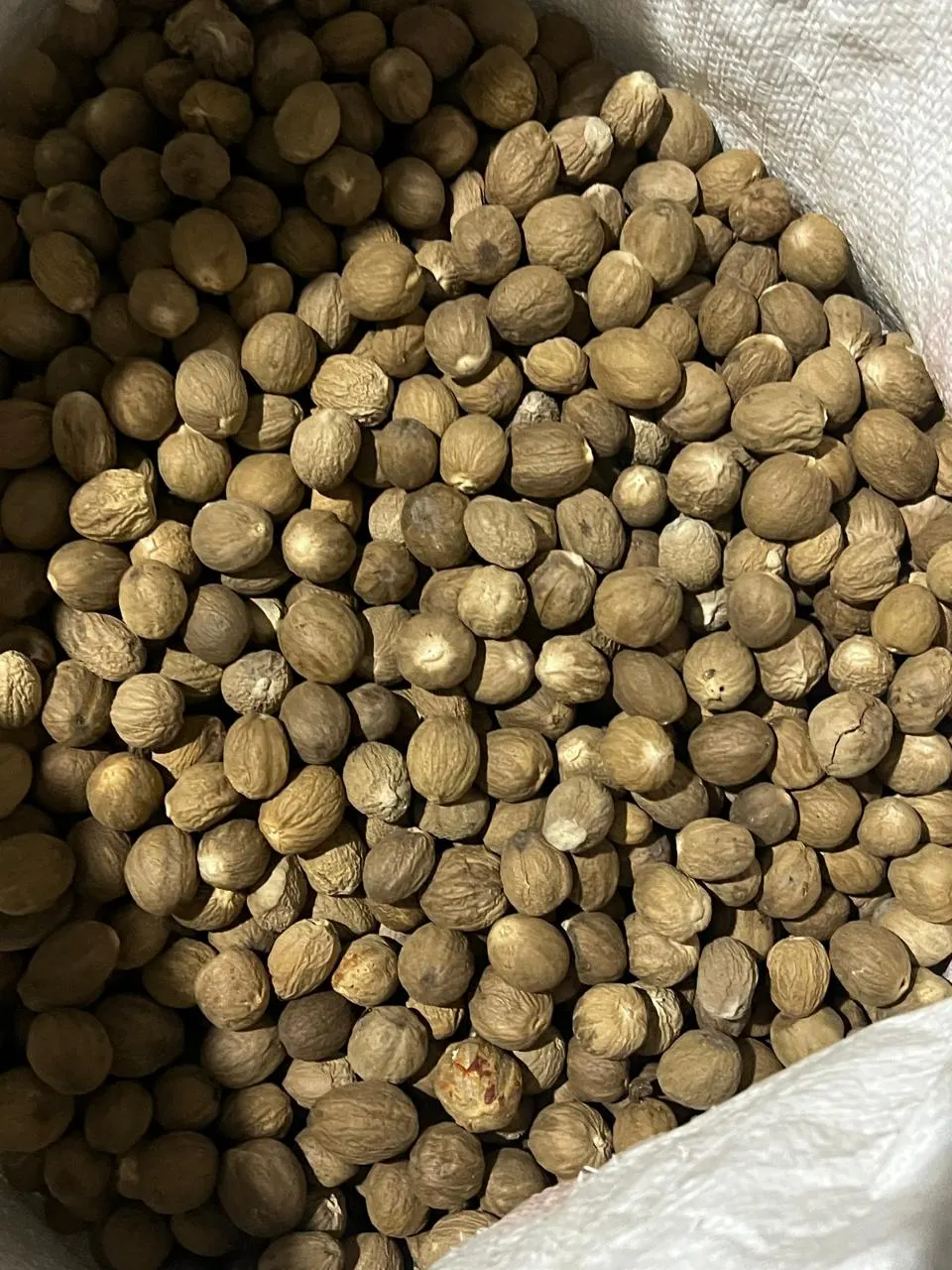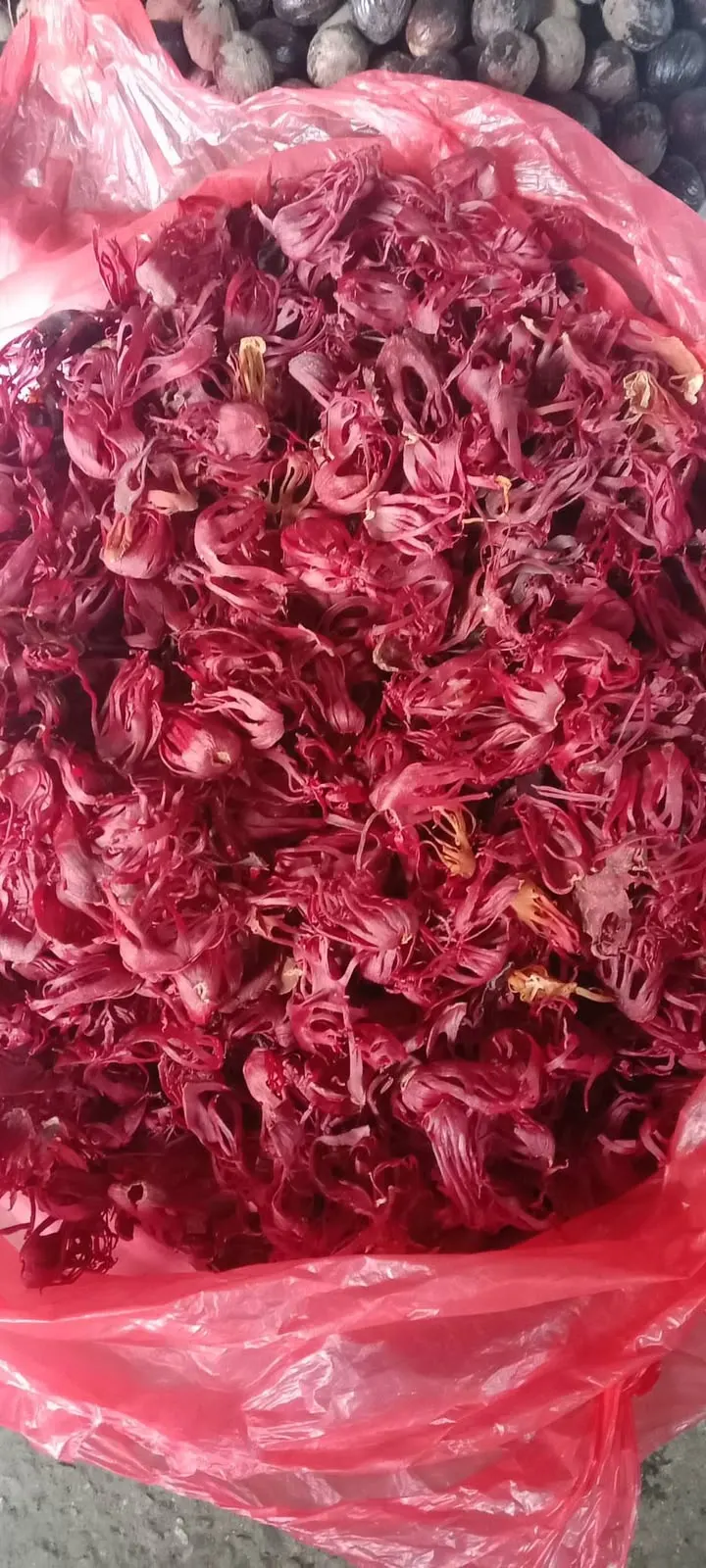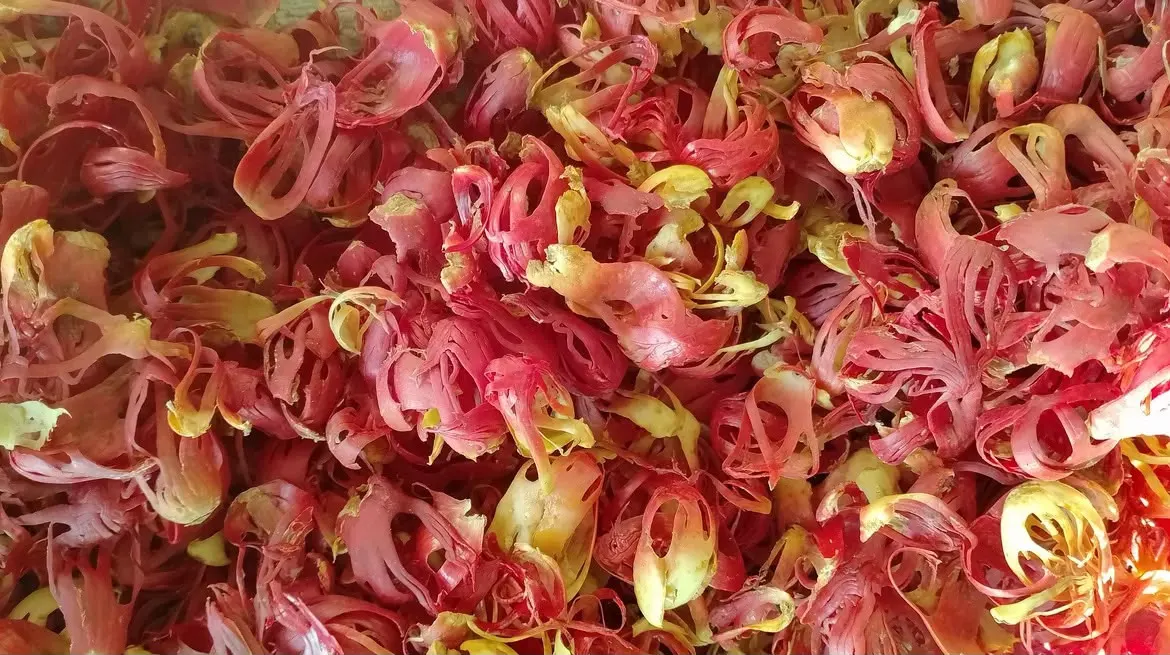
Crack open a ripe nutmeg fruit and you will see something you do not expect: a dark brown seed wrapped in a net of bright, almost glowing red. That red net is mace. It is one of the prettiest things in the spice world, and kilo for kilo, one of the more valuable.
Where mace comes from
The nutmeg tree, Myristica fragrans, bears a fruit that splits open when it is ripe. The seed inside becomes nutmeg. The red, lacy covering around it, called the aril, is peeled off by hand, flattened and dried, and that is mace.
One fruit gives you far more nutmeg than mace by weight. That is the main reason mace usually costs more per kilogram than the nutmeg it came from.
From red to orange
Fresh mace is crimson. It is laid out to dry in the sun, or over gentle heat, for several days. As it dries, the colour fades to orange or orange-red and the pieces, called blades, turn brittle.
The drying is where good mace is made or lost. Slow, careful drying keeps the colour bright. Rain, a damp storeroom or rushing the job can leave it dull, brown or mouldy.
Whole or broken?
Whole mace means large, unbroken blades with good colour. It is what retail packers and premium spice brands want, because their customers see it.
Broken mace is exactly that: pieces of blade that broke during drying and handling. It comes from the same fruit and smells just as good. It is what grinders, seasoning makers and meat processors usually buy.
Whole mace costs more, partly for its looks and partly because keeping the blades intact takes extra care. If you are going to grind it anyway, broken mace is usually the better deal.
How to judge a lot
Look at the colour first. Bright orange to orange-red is what you want. Dark or brownish pieces suggest old stock or poor drying. Smell it: it should be warm, delicate and slightly sweet, never musty. Well dried mace is generally traded at 10% moisture or less. There should be very little dust, shell or bits of nutmeg mixed in. And like nutmeg, mace can be tested for aflatoxin and microbiology, depending on what your market asks for.
Mace or nutmeg?
They share a family resemblance, but mace is finer and softer, with less of nutmeg’s bitterness. Cooks reach for it in pale foods where flecks of dark nutmeg would look wrong: cream sauces, sausages and other processed meats, cakes, spice blends. Meat processors and seasoning companies are some of its biggest buyers.
If you buy nutmeg as well, our guide to nutmeg grades explains AB, ABCD, SS and BWP.
When you ask for a quote
Tell us whether you want whole, broken or ground mace, the colour you expect (a reference sample is ideal), the destination port so testing can match your market, and the packing and volume. Mace is often bought in smaller amounts than nutmeg, and the two can travel together in one shipment.
We supply whole and broken Indonesian mace alongside nutmeg, FOB Surabaya. See the mace specification or drop us a message.