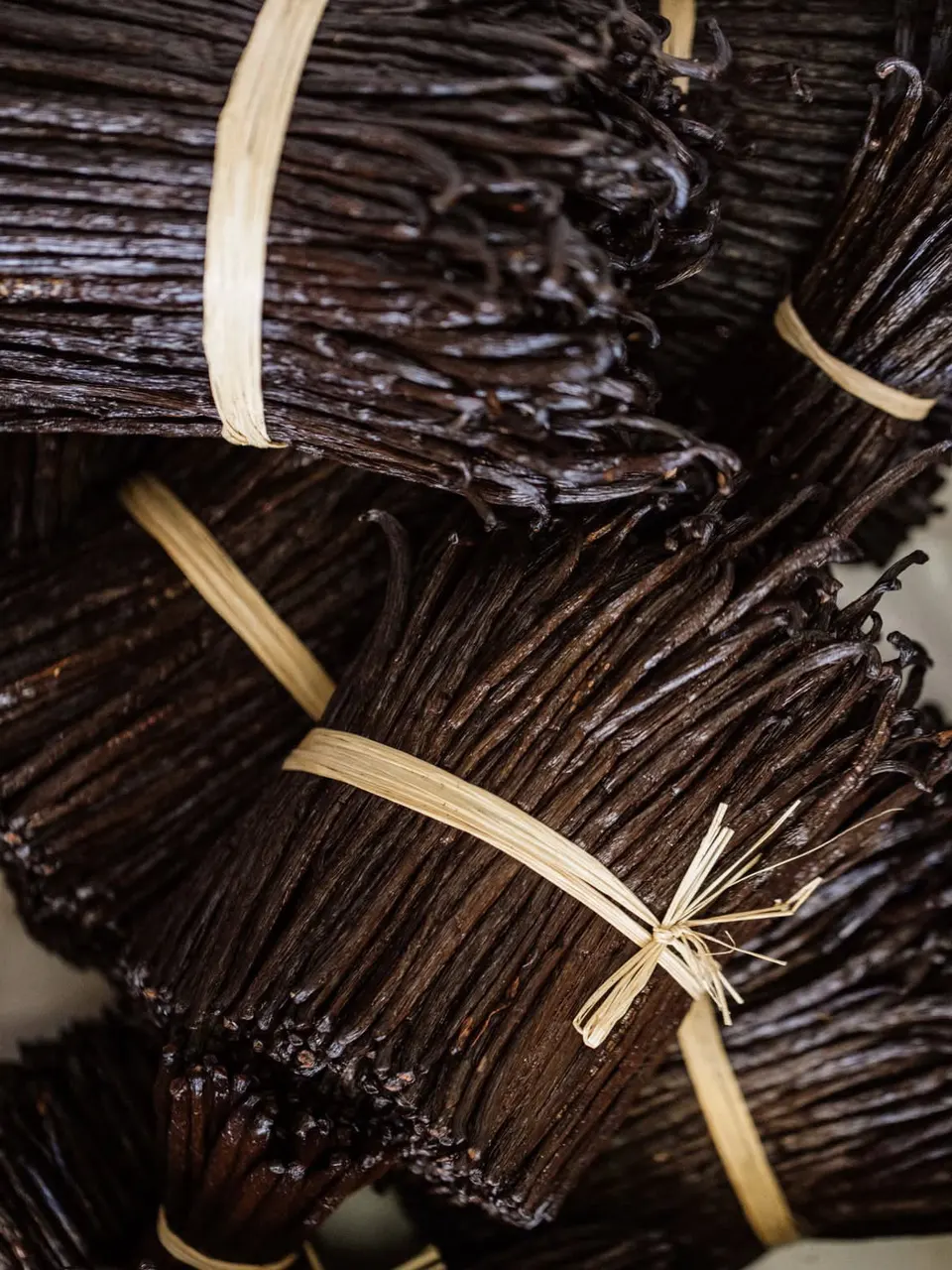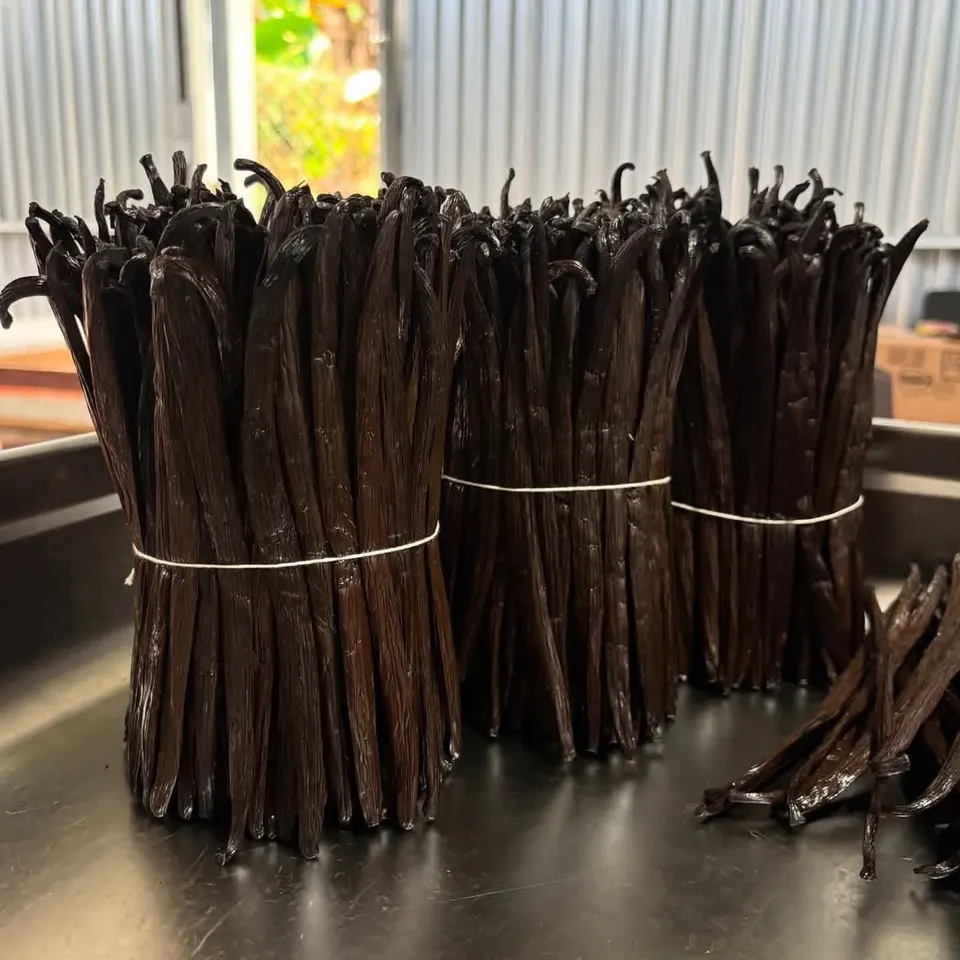
Vanilla is expensive for a reason. The flower has to be pollinated by hand, the pods take months to ripen, and curing them properly takes weeks of patient work. So when a quotation says “Grade A” or “Grade B”, it is worth knowing exactly what you are paying for.
What happens before grading
Most Indonesian vanilla is Vanilla planifolia, the same species grown in Madagascar and Mexico. The pods are picked green when mature and then cured. They are heated, left to sweat, dried in the sun during the day and wrapped up at night, then rested until they turn dark, supple and fragrant. Done well, the whole process takes several weeks.
Only then are the beans sorted, by look, feel, moisture and length, and tied into bundles.
Grade A: the beans you picture
Grade A, also called gourmet or prime, is what a pastry chef hopes to find in the packet. The beans are plump and oily. You can wrap one around your finger without it cracking. The skin is dark brown to nearly black and has a soft shine, and when you split it, the seeds inside are moist and easy to scrape out.
Chefs, bakeries, ice cream makers and retail packers buy Grade A, because their customers see and touch the bean.
Grade B: made for extraction
Grade B beans carry the same aroma, but they do not look as good. They are drier and firmer, often reddish brown, sometimes split or marked on the surface, and not always even in length.
That lower moisture is actually the point. Extract makers pay for dry matter, and a kilo of Grade B gives them more of it. For vanilla extract, flavour houses and industrial use, Grade B is the sensible choice.
| Grade A | Grade B | |
|---|---|---|
| Looks and feel | Plump, oily, glossy, dark brown to black | Drier, firmer, may be reddish or split |
| Moisture | Higher | Lower |
| Best for | Chefs, bakery, ice cream, retail | Extract, flavourings, industry |
| Price per kg | Higher | Lower, with more dry matter |
Length
Length is measured on the cured bean, in centimetres. Ours usually fall between 14 and 20 cm, sorted into bands and bundled by size. Long beans fetch more in the gourmet market. Extract buyers rarely care. Just tell us which band you need.
Moisture, and a word on vanillin
If you only check one number, make it moisture. Beans that are too wet can grow mould on the way. Beans that are too dry lose aroma and weight. Our current beans measure around 25 to 30%, and the actual figure for each lot goes on the Certificate of Analysis.
Vanillin content depends on where the vanilla grew, how ripe it was at harvest and how it was cured. We would rather not quote a general figure that may not hold. If your product needs a minimum vanillin level, ask for the lot to be tested before it ships.
Getting a useful quote
The quickest quotes come from inquiries that tell us the grade (A, B or a mix), the length band, your target moisture, whether you need a vanillin test, how much you need and which port it is going to. Vacuum packed bundles in cartons is the usual packing.
We sell Indonesian vanilla in Grade A and Grade B, FOB Surabaya, and we are flexible on order size. Have a look at the vanilla specification or get in touch.